


wow
The Traitors of Tranquillien
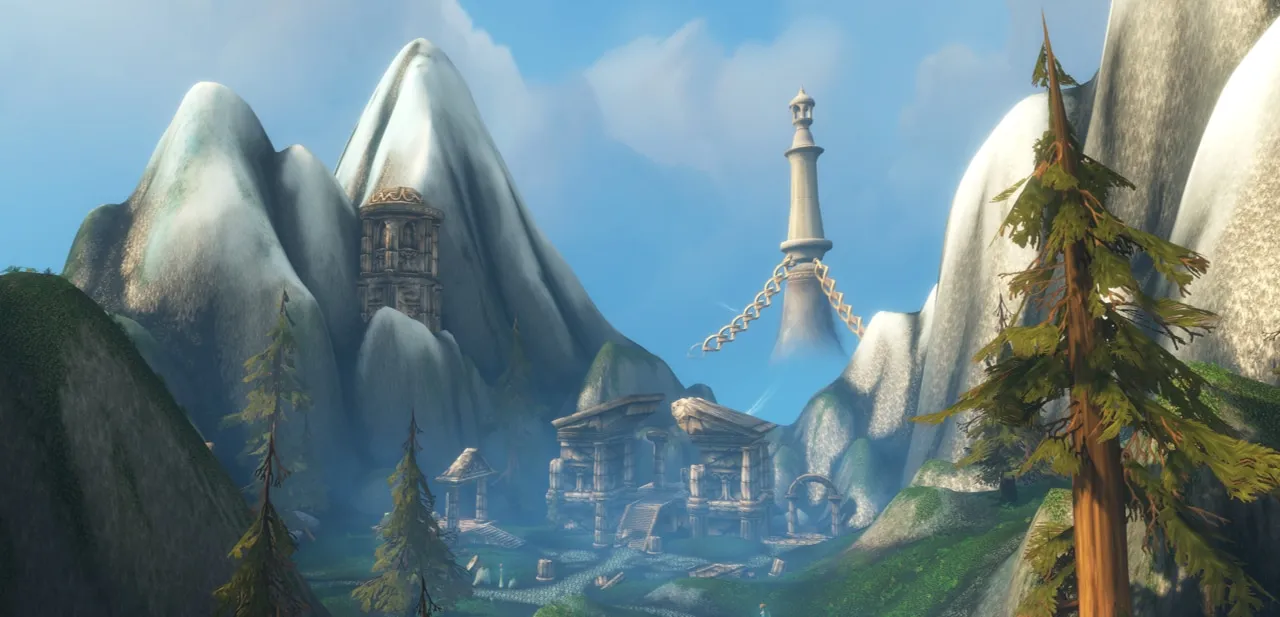
The pamphlets were the first thing to burn. They always are. Laotou walked into Tranquillien at dusk to find the Twilight’s Blade nailing its gospel to every post and doorframe in town, and the monk, who has never once been persuaded by a pamphlet, set about tearing them down.
The cult had been living here a long while, it turned out. Their cover was blown now, so they had stopped pretending and started fighting in the open, which is the only honest thing a cult ever does. Voidlings crawled out from between the houses. Obelisks hummed in the square. There were supply crates to smash and effigies to break, and Laotou broke them, one after another, with the patient rhythm of someone sweeping a floor.
Arator stood among the wreckage and would not let the town fall. The governor had made his terms plain: join the Blade or be executed. So while the fighting went on, the Pandaren went door to door pulling frightened elves out of the line of fire. Healers are good at this part. Nobody writes songs about it, but nobody who was carried out of a burning house forgets who did the carrying.
Then came the ugly work. The traitors of Tranquillien were not strangers. Ranger Lethvalin. Matron Narsilla. Guard Captain Leonic. Names the town had trusted for years, the sort of people who teach the young ones their trade and keep the watch at night. All three wore the Blade’s colors under their cloaks. The chronicler has seen this before, in Lordaeron, in Stormwind, in every city that thought itself too proud to rot. The rot never comes from outside. Laotou cut them down, and Tranquillien was quieter afterward, though not in any way that felt like peace.
From the traitors’ leavings the monk took up a Twilight Agitator’s Stave, held it for the space of a breath, and set it down again in favor of the old Mistdancer Staff. The chronicler approves. A healer should not carry a weapon that was made to stir up crowds.
Magister Umbric had gone missing in the confusion, off chasing Antenorian, the governor who had sold the town. Umbric had his reasons. Kasiea was dead, her research torn from her body, and grief makes a man careless about what waits around corners. Laotou found the trail through a secretary named Faloria, who had a jeweled key and a strongbox and a great deal to answer for. Inside the box were plans of infiltration and a stack of spare pamphlets. Cults are nothing if not well stocked.
Umbric was alive. Angry, but alive.
The cult had marked other places on its maps, and one of them was Windrunner Village, the old seat of the family whose name still makes rangers stand a little straighter. So the road went on, past the Hollow Grove, to a village too quiet for anyone’s comfort. Laotou went about waking the old ranger constructs that slump at its borders, arcane golems gone to rust and moss, and set them back on their feet to stand guard and sniff out snakes in the grass. The monk came away from it with a pair of tights once tailored for a Twilight spy. Spoils are spoils. The chronicler does not ask.
Upstairs in the village, Umbric tried one last ritual. Arator talked. Laotou carried four void shards out of the balconies and fed them, one by one, into the dark sphere at the center of the room, and watched it swell with each. Whatever Umbric learned there, he did not like it. The monk wore a depleted voidshard ring away from that room and gathered a mote of light on the way out, as if the world were trying to even the scales.
Then south, to the Ruins of Deatholme, where Dar’Khan Drathir once kept house for the Scourge and where nothing good has grown since. The Twilight’s Blade has chosen it for a fortress. Fitting, Umbric said. Valeera Sanguinar was waiting there, quiet as a knife in a sleeve. She had tracked Antenorian to a cavern beneath the ruins.
He has gone in. Laotou has not, yet. The cavern waits, and so does the governor, and so do the missing pages of a dead woman’s notes.