


wow
The Eagle on Akil’zon’s Reach
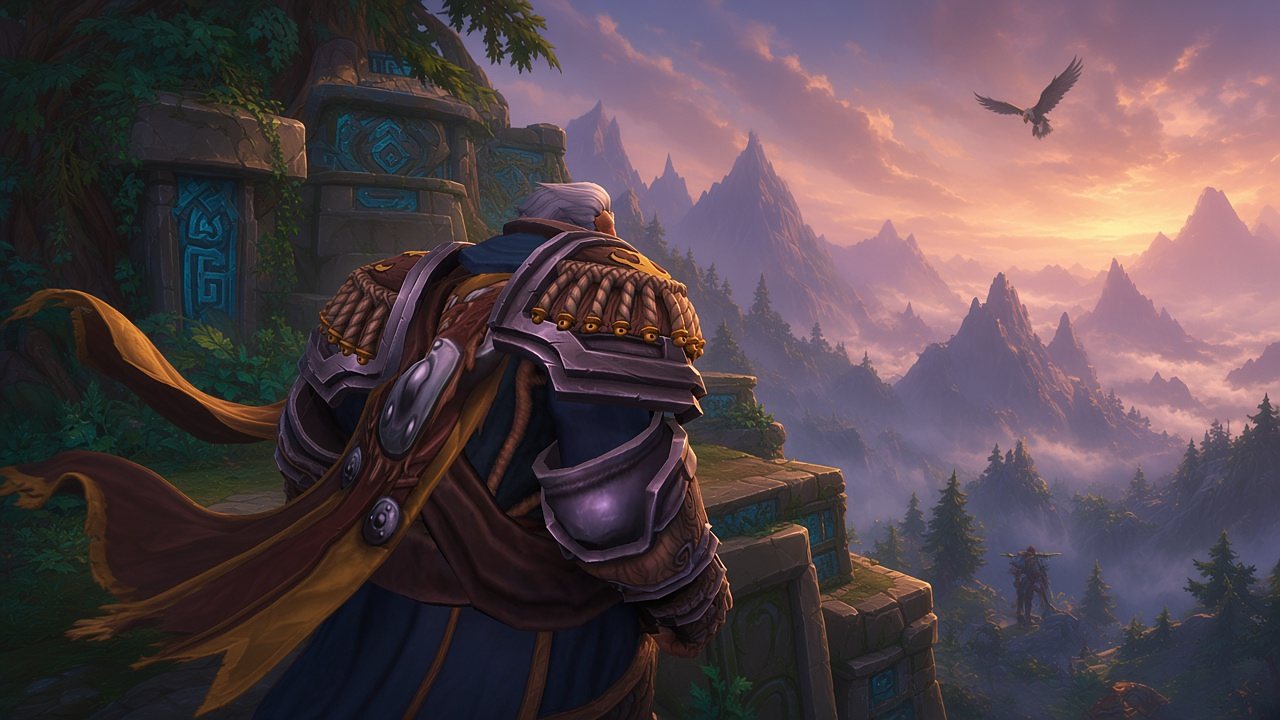
The ledge at the top of the Temple of Akil’zon has no railing, and the wind up there has no manners. Zul’jarra stood at its edge with her eyes closed, trying to remember a lesson from her childhood. The eagle loa, her uncle used to say, is the loa of victory, but also of oaths and conviction. Then the trial came clear, and it was the simplest one in the world. Jump.
Burrly jumped. The chronicler will not pretend to know what a Kul Tiran thinks on the way down. Whatever he thought, the mountain did not have him.
The evening had begun in a city that was already lost. Burrly came back to the Altar of Malacrass, where the frightened of Atal’Aman had been told to gather, and spent the dusk running errands for a people who had spent centuries killing men who looked like him. He went looking for the missing elders, and among them found old Kinduru, the loa speaker, who would not leave until he had the Hash’ey Staff in hand. He proved his worth to Amani who did not want to be impressed. He took up arms blessed by the Light, which in a troll city is its own kind of joke. At Ragemaw Terrace he beat out the fires the Twilight’s Blade had set in the last of the Amani lightwood, because without that wood there would be no ballista and without the ballista there would be no shot at Mor’duun.
He cut down the Twilight Ritualists at Firewing Terrace, the ones dragging fresh cultists into the city through their dark circles, and the Trollbreakers who had already come through. He bled the Twilight where he found it. Then Zul’jan’s ballista was ready, and Burrly manned it while Zul’jarra and Lady Liadrin went to distract the general. He broke the shadows that warded Mor’duun and brought down the general’s barrier.
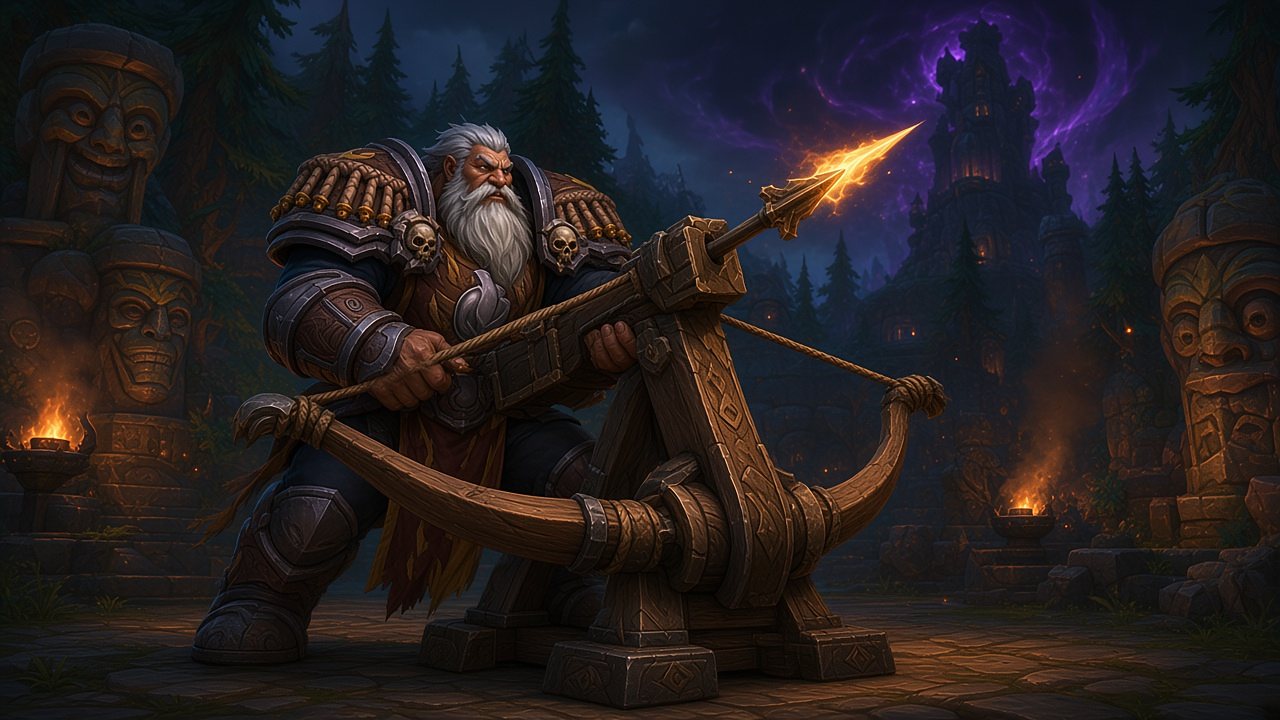
It did not save the city. Zul’jarra had said as much before the first bolt flew. There was too much Void in the stones, too much ruin. Atal’Aman was truly lost, and the best a ballista could buy was time for the people to run.
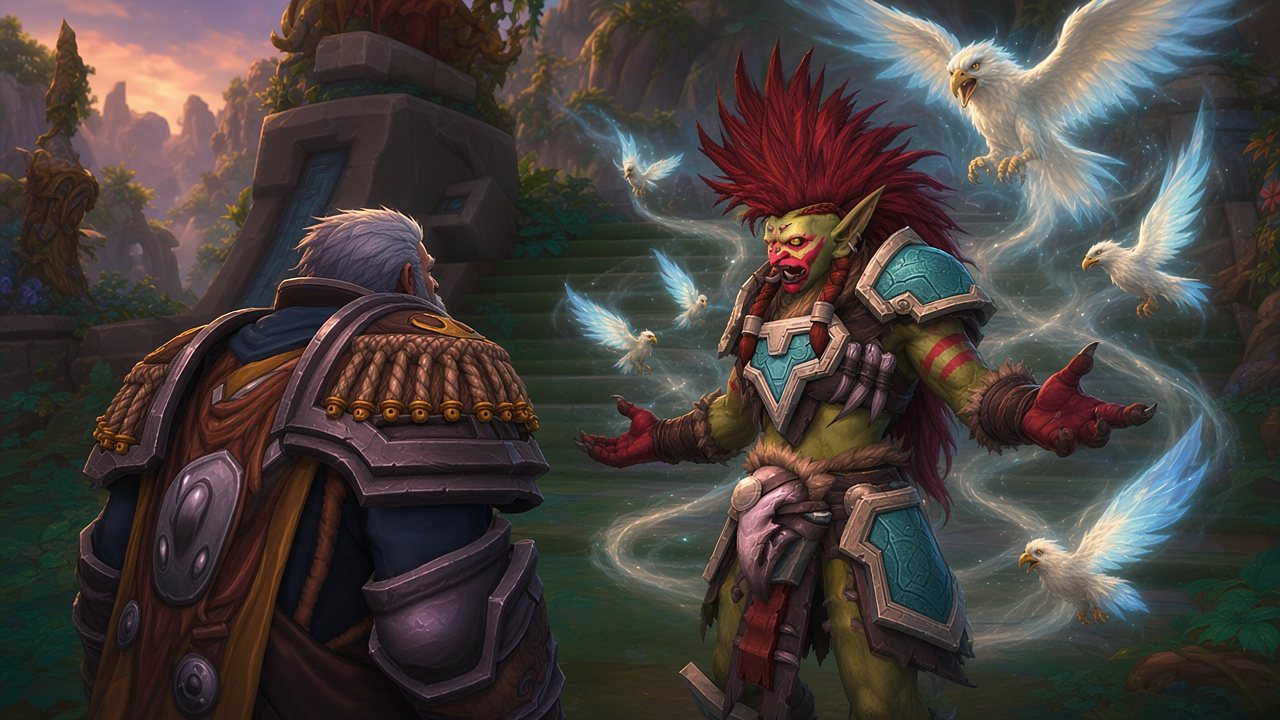
So they ran, to Amani’Zar Village, where Zul’jarra warned him that her people kill strangers on sight and that she could only run so fast if one of them thought he had looked at them wrong. He kept his weapons where they could be seen. He cooked for refugees beside Torundo, her war advisor, which is not a sentence the chronicler expected to write about a sailor. And there, among the tired and the displaced, Kinduru said something no one wanted to hear. The old way. The path of the hash’ey. Zul’jarra called it a tale for children. Then, because she had run out of other tales, she agreed to try it.
Akil’zon’s Reach sits at the foot of the mountains, and the gnarldin had moved in. Big, nomadic, keeping to themselves until recently, and lately breaking the old shrines and eating the eagles. Burrly broke a dozen of them. Zul’jarra, who said she did not know Akil’zon but did know giants, asked for the heads of their three fiercest warriors, Brulagh the Crusher, Cragward Gaahl and Pulverizer Helthra. Burrly brought her all three. She took one by the hair and admired it the way other women admire jewelry. He kept Brulagh’s torque for his own neck, which is the sort of souvenir that tells you how far a man has come from Boralus.
He lit the four Hash’ey Shrines up the mountainside, and the last one at the top. He carried the heads to the temple as an offering, and the eagles, for the first time in years, came back to watch.
And somewhere in the gnarldin country the world coughed up something strange, a little carved thing of the forest that is said to call down green spirit birds out of nowhere to fall on its bearer’s enemies. On Akil’zon’s own mountain. The chronicler does not believe in signs. The chronicler wrote it down anyway.
After the jump, the eagle answered. Zul’jarra felt the blessing buffet her like a gale, and with it came the truth she had been dreading. The loa had been there all along. It was her grandfather, Zul’jin, who broke the bond. It was up to her to mend it.
Burrly stood on the temple stones afterward and felt it again, the thickening of arm and back that comes from surviving one more thing that meant to kill him. Another rung. The mountain did not notice.
Akil’zon pointed them on to Halazzi, the loa of the Witherbark, and at Shadebasin Watch Kul’amara the Fierce told them how the road there runs. But first there is the mist, and Numazon Crypt inside it, where the Vilebranch have been doing to the Witherbark what the Twilight did to Atal’Aman. Zul’jarra means to take a life for every life they took. Burrly carries two promises out of the watch: one to cut through the crypt, the other to bring back whoever the shadows have not yet finished with.
He has not started on either. The mist will keep.